

Panama Coffee


45 million years ago, after the collision of two large volcanic plates, the Isthmus of Panama began to emerge. With the newly divided sea and the passage of time sculpting this stretch of land, rivers formed, forests and jungles grew, and winds and rains were attracted.
Flora and fauna, altitudes and depressions, climate and environment all paid tribute to the unique atmosphere that nurtures the world's finest coffee.

Terroir
A set of variables (soil and microclimates) enhance the microbiota (more than 1,000 biological factors) that influence the final flavor of a cup of Panamanian coffee.
Its coffee-growing region, located approximately 40 km from the Pacific Ocean and 40 km from the Atlantic Ocean, is bathed by cooler Caribbean rains and warmer Pacific rains, creating a diversity unique in the world.
The coffee plantations of Chiriquí are close to protected forests, rich in biodiversity. Panamanian producers are careful to conserve nature to produce highly organic coffee and preserve its flavor.
The flavor is distinguishable on the cupping tables; the terroir on one side of the mountain can have a highly floral flavor and on another, more fruity flavor. Each cup has a unique flavor, different from cups from other farms, something very attractive to the global market.
Home to Panama Geisha


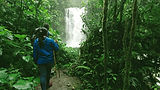
Trails wind through cloud forests filled with exotic birds and hidden waterfalls next to the majestic Barú Volcano, guardian of the horizon, and on clear days you can see both oceans from its summit.
The province of Chiriquí, home to specialty coffee farms, is located on the slopes of Barú Volcano, a protected natural area next to La Amistad International Park, a World Heritage Site.
The highlands of Chiriquí Province, Panama, are a unique landscape. The mountains are dressed in intense green, dotted with wildflowers and coffee plantations that perfume the air.
The highlands of Chiriquí Province, Panama, are a unique landscape. The mountains are dressed in intense green, dotted with wildflowers and coffee plantations that perfume the air.
Trails wind through cloud forests filled with exotic birds and hidden waterfalls next to the majestic Barú Volcano, guardian of the horizon, and on clear days you can see both oceans from its summit.
The province of Chiriquí, home to specialty coffee farms, is located on the slopes of Barú Volcano, a protected natural area next to La Amistad International Park, a World Heritage Site.

BOP
Best Of Panama
More than two decades ago, SCAP initiated the creation of the BOP (Best of Panama) national auction, a series of competitions that, through national and international juries, select the best Panamanian coffees to represent Panama at the most prestigious international auction in the world, setting industry records in both quality and price.


Sustainability
Panama's specialty coffee producers have adopted responsible practices that encompass environmental, social, and economic aspects.
They use techniques that preserve soil fertility, reduce erosion, and promote the unique biodiversity of this region of the planet. The natural irrigation of the bajareque, a distinctive feature of the rainforest ecosystem, provides the necessary water for the coffee plants.
Producers actively participate in the conservation of native ecosystems, and consumers can learn about the origin of the coffee they consume and its traceability.

